

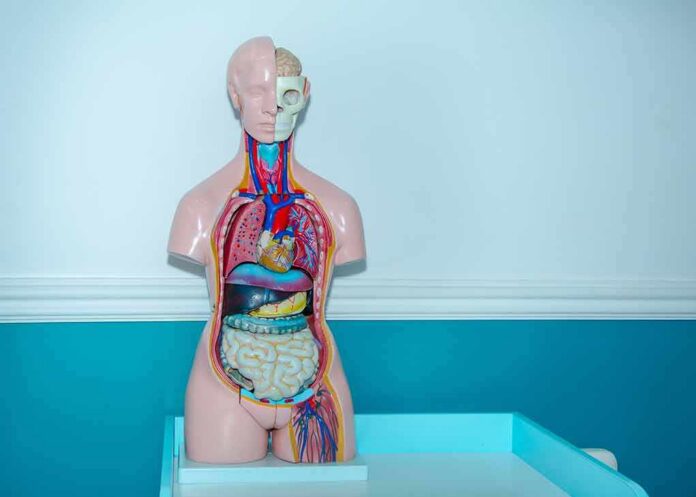
A children’s gut lining is one cell thick, held together by microscopic gates that decide what gets into the bloodstream and what doesn’t.
Story Snapshot
- Integrative pediatrician Dr. Elisa Song explains leaky gut, or increased intestinal permeability, in a podcast clip aimed at parents.
- She describes the gut lining as tight junctions that can loosen, letting toxins, bacteria, and undigested particles slip through.
- Song points to research on food emulsifiers and fermented foods to back her recommendations for children’s diets.
- Medical literature confirms intestinal permeability is real and measurable, though its link to broad childhood symptoms is less settled than some marketing suggests.
What Dr. Song Says Happens Inside A Child’s Gut
Dr. Elisa Song, trained at Stanford, New York University, and the University of California, San Francisco, has spent years explaining pediatric gut health to parents. In this clip, she defines leaky gut plainly. It means increased intestinal permeability, a state where the gut’s single-cell lining loses its grip. She names specific proteins, zonulin, claudin, and occludin, that control how tightly those cells hold together.
When those tight junctions loosen, Song says, the gut wall stops filtering properly. Toxins, bacteria, and viruses can pass into the bloodstream instead of staying contained. That description tracks with how pediatric gastroenterology researchers describe the condition in peer-reviewed literature, where a leaky gut is tied to disrupted epithelial barriers and unwanted substances crossing into circulation.
The Studies Behind Her Claims
Song backs her explanation with outside research rather than presenting it as her own theory alone. She cites a Japanese study linking food emulsifiers to autoimmune disease, and a Stanford study connecting fermented foods to greater microbiome diversity. She is careful to call the emulsifier link a correlation, not proof of cause and effect, which keeps her claim honest rather than overstated.
That kind of caution matters. Medical reviews confirm intestinal permeability shows up in several childhood conditions, including inflammatory bowel disease, malnutrition, and functional gastrointestinal disorders. Researchers commonly test for it using a lactulose and mannitol urine ratio, a recognized clinical method for measuring how much slips through the gut wall. Song’s framework fits inside that established science rather than inventing new mechanisms.
Turning The Science Into Everyday Advice
Song does not stop at biology. She translates it into action for families. She recommends fiber, phytonutrients, fermented foods, regular movement, good sleep, hydration, and label-reading habits to build a resilient microbiome in kids. She has built this into what she calls a Gut-Brain ReSET approach, with sealing and healing the gut lining as one clear step.
This is where her message becomes useful for parents skimming past dense medical jargon. Instead of leaving families with abstract cell biology, she hands them a grocery list and a bedtime routine. That practical bent explains why her interviews keep getting booked across wellness podcasts, from Designs for Health to Wellness Mama to Northwestern’s Feinberg School of Medicine podcast platform.
Where The Broader Science Still Draws Lines
Pediatric researchers agree the gut barrier is real and measurable. Reviews confirm tight junction disruption plays a role in serious conditions like necrotizing enterocolitis and environmental enteric dysfunction, which affects malnourished children in developing regions. Zonulin, the protein Song references, shows up as a working biomarker in studies of pediatric inflammatory bowel disease patients too.
Where science moves more carefully is in stretching leaky gut into a catch-all explanation for allergies, anxiety, or broader chronic illness in otherwise healthy kids. That broader leap remains an active area of study rather than settled fact. Parents should treat Song’s framework as a starting point for conversation with their own pediatrician, not a replacement for one.
Why This Conversation Keeps Resurfacing
Song’s consistent message across dozens of interviews signals she is not chasing a trend. She has repeated the same core points, seal the gut, feed the microbiome, watch the food additives, since at least 2024. That repetition suggests she believes the message deeply enough to keep explaining it in nearly identical terms, episode after episode.
For parents raising kids on processed snacks and antibiotics prescribed for every sniffle, her clip offers a framework grounded in real biology, even if some applications remain under study. That combination, sound science paired with actionable habits, is likely why her audience keeps growing one podcast appearance at a time.
Sources:
youtube.com, moonjuice.com, linkedin.com, wellnessmama.com, documentinghope.com, account.allinahealth.org, cdn.amegroups.cn, journals.plos.org