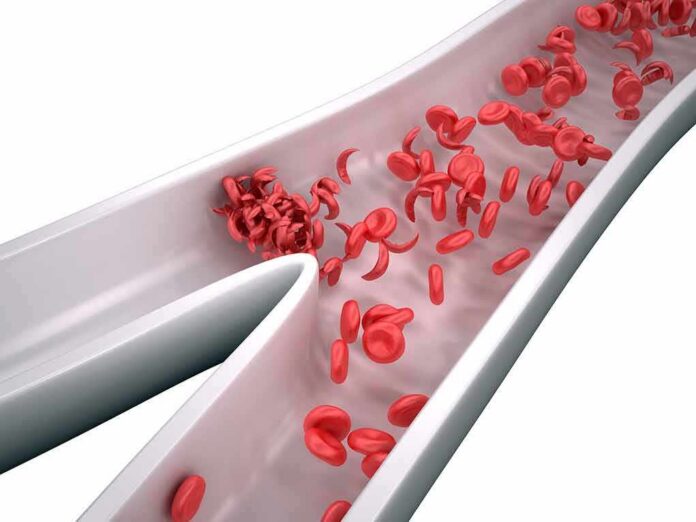
Clogged arteries rarely announce themselves with a single dramatic symptom, but doctors say the body often drops warning clues years before a heart attack or stroke ever happens.
Story Snapshot
- Leg pain that eases with rest, known as claudication, is a classic sign of blocked leg arteries.
- A whooshing sound in the neck or ears can point to narrowed carotid arteries feeding the brain.
- Erectile dysfunction can show up three to five years before chest pain or a heart attack because smaller penile arteries clog first.
- Cold feet, hair loss, and shiny skin on the legs signal poor blood flow from artery blockages.
- No single sign proves a blockage exists, so doctors still rely on tests like ultrasound or CT scans to confirm the diagnosis.
Leg Pain That Vanishes at Rest Signals Blocked Blood Flow
Doctors call it intermittent claudication. It’s a cramping or aching pain in the calf, thigh, or hip that shows up during walking and fades within minutes of sitting down. The British Heart Foundation lists this pattern as one of the clearest signs of peripheral artery disease, a condition where plaque narrows the arteries that carry blood to the legs. The pain returns predictably with activity because the muscle isn’t getting enough oxygen-rich blood to keep up with demand.
What makes this symptom easy to miss is how gradual it feels. Many people chalk it up to aging or a bad workout instead of a warning sign. Left unchecked, peripheral artery disease raises the risk of the same plaque buildup happening in the arteries around the heart and brain, since atherosclerosis rarely stays confined to one part of the body.
Neck Sounds and Ringing Ears Point to Narrowed Arteries
A carotid bruit is a swishing sound a doctor hears through a stethoscope placed on the neck. It happens when blood squeezes through a narrowed carotid artery, the main vessel supplying the brain. Research published through the National Institutes of Health found that patients who reported a pulsing sound in their own ears, called pulsatile tinnitus, often turned out to have confirmed carotid artery narrowing once imaging was done.
That same study concluded doctors should strongly suspect carotid disease in older patients who have heart risk factors and report this kind of rhythmic ear noise. Pulsatile tinnitus has other possible causes too, so it isn’t proof by itself. But paired with risk factors like high blood pressure or smoking, it’s a signal worth checking with imaging rather than ignoring.
Erectile Dysfunction Often Arrives Years Before a Heart Attack
Cardiologists increasingly treat erectile dysfunction as an early alarm bell rather than just a quality-of-life issue. The Princeton IV consensus guidelines, highlighted by the Mayo Clinic, describe erectile dysfunction as a genuine red flag for cardiovascular disease because the arteries feeding that part of the body are smaller and clog earlier than the coronary arteries. A large meta-analysis of prospective studies backed this up, finding erectile dysfunction independently linked to higher rates of heart disease, stroke, and death from any cause.
The timing matters. Doctors note the warning can surface three to five years before chest pain or a heart attack, giving men a real window to get screened and make changes. That makes it one of the more actionable signs on this list, since it often shows up while a person still feels otherwise healthy.
Skin, Nail, and Temperature Changes Reveal Poor Circulation
Poor blood flow to the legs and feet leaves physical fingerprints. Cold feet that never seem to warm up, shiny or thinning skin, hair loss on the lower legs, weak pulses, and slow-healing sores are all recognized signs of restricted circulation from artery blockages. These changes happen because tissue starved of oxygen-rich blood struggles to maintain normal skin and nail growth.
None of these signs work in isolation as a diagnosis. Claudication points to leg arteries, a carotid bruit points to the neck, and erectile dysfunction points to pelvic vessels, but they all trace back to the same underlying disease process: plaque building up inside artery walls throughout the body. Doctors still confirm blockages with tests like Doppler ultrasound, ankle-brachial index measurements, or CT angiography. But recognizing these physical clues early gives patients a real chance to act before a blockage turns into a heart attack or stroke.
Sources:
drsumitkapadia.com, webmd.com, jacc.org, newsmax.com, healthline.com, timesofindia.indiatimes.com, pmc.ncbi.nlm.nih.gov