

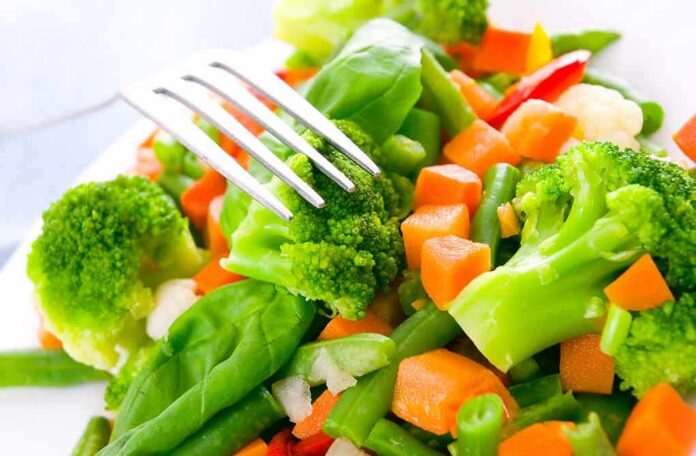
Spinach, almonds, and sweet potatoes sit on every healthy-eating list, but new research says a compound hiding inside them may fuel gut inflammation in people with inflammatory bowel disease.
Quick Take
- A University of North Carolina study found key oxalate transporters are reduced in gut tissue from both Crohn’s disease and ulcerative colitis patients.
- Researchers say impaired oxalate absorption may let the compound build up in the gut and worsen inflammation, especially in genetically susceptible people.
- The study relies on tissue samples, diet tracking, and mouse models rather than a human trial proving oxalate causes flares.
- UNC researchers and international guidelines both say this is not a reason to cut plant foods from the diet broadly.
What The New Study Actually Found
Researchers at the University of North Carolina looked at gut tissue from patients with inflammatory bowel disease (IBD). They found two proteins that help the body process oxalate, called SLC26A2 and SLC26A3, showed up at lower levels across the board. This held true in both Crohn’s disease and ulcerative colitis, in different parts of the gut, and whether or not the tissue was actively inflamed.
Oxalate is a natural compound found in many plant foods, including spinach, beets, almonds, and cocoa. Normally, the gut absorbs it and clears it out. But when these transporter proteins run low, researchers say oxalate can build up inside the intestine instead of leaving the body. Their data suggest this buildup may add fuel to the inflammation that already defines these diseases.
Why Scientists Think It Matters For Flares
The study’s published findings go further, stating dietary oxalate “may exacerbate innate immune responses in susceptible individuals”. That means the compound might not cause IBD on its own, but it could make existing inflammation worse in people whose bodies already struggle to clear it. The team also tested this idea in mice, feeding them oxalate alongside a colitis-triggering agent, and found worse outcomes in that group.
The researchers call their approach the first to use detailed genetic food-tracking methods to study diet in IBD patients specifically, then connect the results to oxalate biology. That combination of diet data, tissue testing, and animal experiments gives the theory more weight than a single lab finding alone. Even so, the paper frames oxalate as “a potential contributor” to disease, not a proven cause.
The Gaps That Keep This From Being Settled Science
No published trial has yet put people with IBD on a low-oxalate diet and tracked whether their flares, hospital visits, or gut healing actually improved. Everything published so far comes from tissue samples, diet surveys, and mouse experiments. That is a meaningful start, but it falls short of the gold-standard proof doctors usually want before changing patient advice.
There is also a chicken-and-egg problem baked into the data. Transporter levels were low in damaged gut tissue whether or not it was inflamed at the time, which raises a fair question. Does low oxalate clearance help cause the inflammation, or does IBD damage just happen to lower these transporter levels as a side effect? The current findings do not settle that either way.
Older Research Already Pointed To Oxalate Trouble In Crohn’s
This is not the first time oxalate has come up around IBD. Decades-old research already showed Crohn’s disease patients had higher urinary oxalate levels than healthy people, especially those with ileal disease or prior bowel surgery. A separate study found urinary oxalate ran higher in Crohn’s patients with kidney stones than in ulcerative colitis patients with stones.
That older evidence mostly concerned kidney stones, not gut inflammation itself. It still shows the body’s oxalate handling breaks down in a predictable way in Crohn’s disease, which gives the new inflammation theory a plausible foundation rather than leaving it to stand alone.
Doctors Say Don’t Panic And Cut Out Vegetables
The UNC team is explicit that this is not a call to strip plant foods from anyone’s plate. Their own summary states people can keep a nutritionally complete, plant-based diet while still lowering total oxalate intake, since the compound occurs naturally in nearly all plant foods. Cutting entire food groups over one study would be an overreaction.
A hidden compound in healthy foods may worsen IBD | The University of North Carolina at Chapel Hill
Spinach, almonds, and sweet potatoes are often praised for their nutritional value. But new research from the UNC School of Medicine suggests that for people with inflammatory… pic.twitter.com/u0IvnBdFm5
— Owen Gregorian (@OwenGregorian) September 13, 2026
European gut-disease guidelines back that caution up. The European Society for Clinical Nutrition and Metabolism says oxalate restriction only makes sense for patients who keep getting kidney stones, not as blanket advice for everyone with IBD. The European Crohn’s and Colitis Organisation lists onions, potatoes, mushrooms, avocados, and apples as foods that still fit on a low-oxalate plan. For most patients, this remains a lead worth watching, not a diet overhaul worth rushing into.
Sources:
sciencedaily.com, news.unchealthcare.org, pubmed.ncbi.nlm.nih.gov, it-boltwise.de, pmc.ncbi.nlm.nih.gov, hi.kormedi.com