

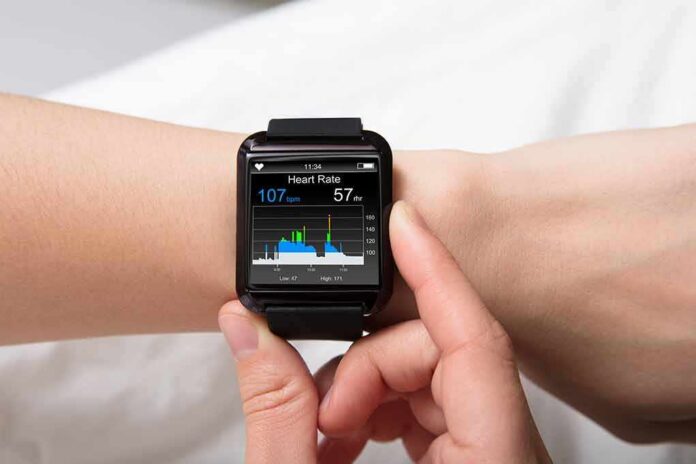
Your smartwatch might notice you’re getting sick three days before you feel it, but it also might send you into a panic over nothing.
Quick Take
- Wearables track personal baselines like resting heart rate and skin temperature, flagging changes before symptoms show up.
- Peer-reviewed research shows devices help most when paired with coaching or medical programs, not used alone.
- Heart rhythm alerts carry a high false-positive rate, sometimes flagging problems that are not really there.
- Data ownership and device cost raise real questions about who benefits most from this technology.
Why Your Own Baseline Matters More Than Averages
Health wearables do not compare you to everyone else. They watch you against you. A 2022 discussion on wearables and big data explained it simply: everybody has a different baseline resting heart rate, skin temperature, and blood oxygen level. The device learns your normal, then watches for drift away from it. That shift in thinking, from population charts to personal patterns, is what makes these gadgets genuinely useful.
The same source claims wearables can sometimes catch illness before symptoms appear, in one case three days ahead of onset. That is not the device diagnosing anything. It is the device noticing something changed and nudging you to pay attention. Separate research reinforces this idea, describing wearables as tools that spot deviations from a personalized baseline without claiming to identify a specific illness.
The Data Backs Steady Health Gains, With a Catch
Real numbers support some of the hype. A study tracking more than 20,000 users of a digital health platform found sustained improvements in cholesterol and blood sugar markers over time, with wearable data helping identify who was actually improving. That is a meaningful result. But the improvement came from a full package, blood tests, guidance, and genetics, not the wearable acting alone.
That pattern repeats across the research. A review of wearables for adults with type 2 diabetes found the devices support physical activity best when built into structured behavioral programs, not as stand-alone fixes. Cardiovascular research tells a similar story. Wearables can detect irregular heart rhythms, track declining heart function, and flag risk for hospitalization, but the step-count gains from fitness tracking alone are modest at best.
False Alarms Are the Trade-Off Nobody Talks About Enough
Here is the part that deserves more attention. Heart rhythm professional groups have raised clear concerns about wearable accuracy for detecting atrial fibrillation, warning that false positives can cause real harm through unnecessary worry and extra medical visits. That concern lines up with a broader truth in this field: chasing high sensitivity, catching every possible problem, almost always means accepting more false alarms along the way. One clinical trial in older stroke survivors found that roughly two-thirds of people who got an atrial fibrillation alert from a smartwatch did not actually have the condition. That is not a small margin of error. For someone with no medical background, an alert like that can trigger real anxiety, extra doctor visits, and tests that were never needed in the first place.
The fix is not to throw out the technology. It is to use it the way peer-reviewed research already recommends, as a complementary tool that prompts a conversation with a doctor rather than a verdict on your health. A 2025 review of wearables for health promotion put it plainly: these devices provide valuable information for personal health management and clinical care, and support early detection of issues, but they work best alongside professional judgment, not as a replacement for it.
What This Means for Everyday Users
Affordability is its own real issue. The devices with the most advanced sensors tend to cost the most, which means the people who could benefit most from early detection may be priced out of the tools that offer it. That is not a knock on the technology itself. It is a reminder that innovation without access does not help the people who need it most.
None of this means wearables are a gimmick. It means they are exactly what good tools usually are, powerful when used with judgment, and risky when treated as gospel. Track your baseline, watch for real change, and when something looks off, let a doctor make the call instead of your watch.
The takeaway for anyone strapping on one of these devices is simple. Trust the trend, question the panic, and remember a wristband was never meant to replace a stethoscope.
Sources:
youtube.com, journals.plos.org, pmc.ncbi.nlm.nih.gov, journal.idscipub.com