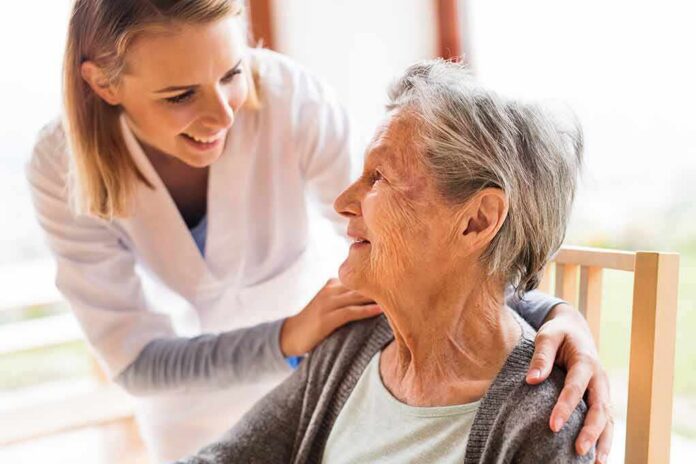
Family support can change the course of a loved one’s recovery from addiction or mental illness, but it was never meant to replace professional care or turn relatives into unpaid therapists.
Quick Take
- Federal health guidance confirms family involvement can boost treatment engagement and outcomes for people with substance use or mental health disorders.
- The Substance Abuse and Mental Health Services Administration (SAMHSA) stresses a judgment-free, listening approach over lectures or ultimatums.
- Recovery follows many paths, and a loved one’s sobriety is never a family member’s personal responsibility.
- Caregiver burnout is real, and federal guidance tells families to protect their own health while helping others.
What Federal Guidance Actually Says About Family’s Role
SAMHSA, the nation’s lead agency on substance use and mental health policy, states plainly that family support can play a major role in recovery. Relatives often become the bridge between a struggling loved one and treatment, helping locate services and offering reassurance that these disorders are treatable. That’s not a feel-good slogan. It’s the stated position of the agency that funds and studies addiction care nationwide.
Families who want to help aren’t left guessing how to start the conversation. SAMHSA’s guidance recommends creating what it calls a judgment-free and loving environment, where concern gets expressed without shame or blame attached to it. That matters because stigma keeps people silent, and silence keeps people sick. A kitchen-table talk rooted in love works better than an intervention staged like a courtroom trial.
Why One-Size-Fits-All Advice Falls Short
Recovery doesn’t look the same for every person, and good guidance never pretends otherwise. SAMHSA describes recovery as highly personal, happening through clinical treatment, medication, peer support, family involvement, self-care, or some combination unique to the individual. A family that insists on a single approach, whether that’s forced rehab or total hands-off distance, risks working against the very person they’re trying to help. Flexibility beats formula every time.
Clinical research backs this up with real numbers. A systematic review of family engagement in substance use treatment found favorable outcomes, including reduced substance use and better family functioning, across multiple studies. Another review of psychosocial interventions for family members affected by a loved one’s substance use found measurable benefits for the family’s own well-being, not just the patient’s. The science supports involvement, not control.
Where Responsibility Ends and Support Begins
Here’s the line too many families cross without meaning to. SAMHSA states directly that a loved one’s sobriety does not depend on the family member, and the family member did not cause the substance use disorder in the first place. That distinction protects both sides. It frees relatives from guilt they never should have carried, and it keeps the person in recovery accountable for their own choices, which is exactly how lasting change actually works.
Official advisories also flag real limits on when family involvement helps. Factors like active withdrawal, co-occurring mental illness, legal trouble, or a history of family violence all change what safe involvement looks like. A conversation that works in a calm living room can turn dangerous in a home with a history of abuse. Smart families read the room, and good guidance tells them to.
Protecting Caregivers From Burning Out
Caring for a struggling loved one can wear a person down fast. SAMHSA’s own materials warn that caregiving can be stressful and emotionally draining, and they urge family members to prioritize their own health right alongside their loved one’s. That’s not selfish. A collapsed caregiver helps no one. Support groups, therapy, and simple rest aren’t luxuries here; they’re maintenance for the people doing the heavy lifting at home.
Clinical trials involving structured family-based treatment programs have shown measurable gains in abstinence rates, treatment retention, and motivation when families participate in the right way. The research doesn’t say families must do everything alone. It says a trained, supported, boundaried family member often becomes the single most effective ally a person in recovery can have. That’s the real takeaway, and it’s worth repeating to every exhausted parent or spouse who thinks they’re failing simply because the road is long.
Families looking for their next step don’t have to guess where to turn. Locating a support group designed for people facing addiction or mental illness in the home gives relatives a structured place to process their own stress. The goal isn’t perfection. It’s showing up, staying honest, and letting professionals handle what professionals are trained to handle.
Love shows up in the willingness to listen without judgment, connect a loved one to real treatment, and step back from the idea that any one person can save another. That balance, grounded in federal guidance and backed by clinical research, gives families a realistic map instead of an impossible burden.
Sources:
samhsa.gov, library.samhsa.gov, tandfonline.com