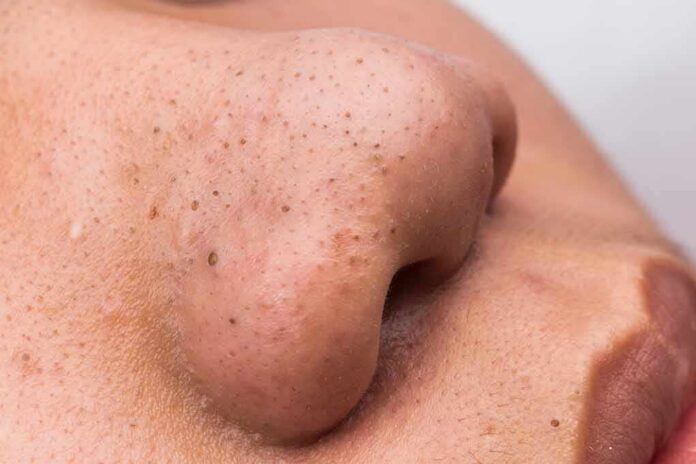
A huge new study of more than 228,000 adults found that people who eat more like the Mediterranean do have less acne, and the link shows up strongest in women.
Story Snapshot
- Researchers at King’s College London studied 228,757 adults using data from the UK Biobank health database.
- Higher scores on a Mediterranean-style diet pattern lined up with lower odds of having current acne.
- Only 0.7% of participants reported current acne, while 2.5% said they had a history of it.
- Scientists stress this is a pattern, not proof that food alone causes or cures breakouts.
What The New Study Actually Found
The research, published in the Journal of the European Academy of Dermatology and Venereology, looked at dietary habits across a massive pool of adults aged 37 to 73. Among the 228,757 people studied, 1,603 reported having acne at the time of the survey. After adjusting for other factors, people who followed the Mediterranean diet more closely had notably lower odds of current acne, with the effect reaching statistical significance.
The adjusted odds ratio came in at 0.93, meaning each step up in Mediterranean diet adherence was tied to a 7% drop in the odds of having acne right now. That is not a dramatic number, but in a study this large, it clears the bar for statistical significance. Reporting on the findings noted the connection appeared especially strong among women, a detail that lines up with known hormonal differences in how skin reacts to inflammation.
Why Doctors Have Suspected This Link For Years
This is not the first time scientists have connected what people eat to their skin. A French study of over 24,000 adults, published years earlier in JAMA Dermatology, found that eating fatty and sugary foods, sugary drinks, and milk was tied to a higher chance of adult acne. Other research has pointed to high glycemic index diets, foods that spike blood sugar fast, as a possible trigger for breakouts.
A broad review covering research from 2009 to 2020 pulled together 53 studies on diet and acne, but only 11 of those were actual clinical trials where researchers controlled what people ate. The other 42 were observational, meaning they tracked people’s habits and health without testing cause and effect directly. That mix matters because it shapes how confident anyone can be in the results.
Why Scientists Still Urge Caution On Cause And Effect
Even the Wiley-published study behind this new finding says its own clinical significance remains uncertain, despite the statistical link holding up. A separate meta-analysis on the Mediterranean diet and acne found that higher adherence was linked to less severe acne in people who already had it, but the connection to whether someone develops acne in the first place was not statistically significant. That is a meaningful distinction for anyone hoping diet alone will clear their skin.
Another pooled analysis looking at glycemic load, dairy, and fatty acids found no significant overall link between those specific factors and acne risk, even though the biological reasoning behind the idea makes sense. Hormones and inflammation pathways could plausibly connect diet to skin, but the studies disagree on how strong, or even whether, that connection truly is in practice.
What This Means For Everyday Eating Decisions
Harvard Health has pointed out that studies comparing diets across thousands of adults do find patterns worth taking seriously, even without full proof of causation. For the average American adult dealing with breakouts well past their teenage years, the takeaway is not to panic or overhaul everything overnight. It is to notice that eating more vegetables, fish, and whole grains, and less sugar and processed food, keeps showing up as linked to better skin outcomes.
Common sense says a diet that is good for your heart, waistline, and blood sugar is unlikely to hurt your skin either way. Nobody needs a 228,000-person study to justify eating more vegetables and less junk food. But this research gives people a real, evidence-backed reason to make that swap, rather than just a vague wellness trend promoted online.
Sources:
mindbodygreen.com, pmc.ncbi.nlm.nih.gov, pubmed.ncbi.nlm.nih.gov, onlinelibrary.wiley.com, nplus1.ru