
A shoulder that seizes up for no apparent reason — no fall, no injury, no warning — is one of the more disorienting things that can happen to a body in midlife, and for a striking number of women it arrives right on schedule with perimenopause.
Key Points
- Frozen shoulder (adhesive capsulitis) affects roughly 2 to 5% of the population but clusters heavily in women aged 40 to 60, the classic perimenopausal and menopausal window.
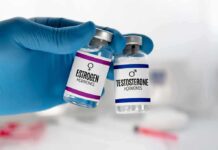
- Duke researchers found postmenopausal women on hormone replacement therapy had a lower risk of the condition than those without estrogen, pointing to a hormonal mechanism.
- Estrogen appears to regulate inflammation and collagen turnover in the joint capsule; when levels fall, the capsule may thicken and stiffen more readily.
- Recovery is typically slow (often one to three years) but the condition almost always resolves, and treatment options range from physical therapy to targeted injections and, rarely, surgery.
What Frozen Shoulder Actually Is
Adhesive capsulitis, its clinical name, describes a joint capsule — the fibrous, collagen-rich sac that envelops the shoulder joint and normally allows it to glide through an enormous range of motion — that has become inflamed, thickened, and contracted. As scar-like tissue accumulates inside the capsule, the shoulder loses mobility in stages: first pain, then progressive stiffness, then, eventually, a slow thaw back toward normal function. The condition affects an estimated 2 to 5% of the general population, but the distribution is far from even. It shows a strong female skew and a sharp peak between ages 40 and 60, the very years during which most women pass through perimenopause and into menopause.
That overlap alone would be enough to raise a researcher’s eyebrow, but it’s not the only clue. Frozen shoulder is also disproportionately common among people with diabetes and thyroid disorders — endocrine conditions, not injuries — which has long told orthopaedic specialists that something systemic, not mechanical, is driving much of the disease. A shoulder does not typically freeze because it was overused; it freezes because the biology of the tissue itself has changed. That reframing, from a mechanical problem to an endocrine one, is what has pulled menopause research and orthopaedics into the same conversation over the past several years.
The Estrogen Hypothesis: What the Evidence Actually Shows
The strongest specific evidence for a hormonal mechanism comes from Duke University, where orthopaedic surgeon Dr. Jocelyn Wittstein led a retrospective analysis of postmenopausal women and found that those on hormone replacement therapy had a measurably lower risk of developing adhesive capsulitis than women who received no estrogen. Wittstein’s explanation, as reported by Duke’s own orthopaedic surgery department, is that estrogen does real structural work in the body beyond reproduction: it stimulates bone growth, tempers inflammation, and helps maintain the integrity of connective tissue. Take estrogen out of the equation, as menopause does, and the collagen-rich capsule surrounding the shoulder joint may lose some of its resilience and its capacity to resolve low-grade inflammation before it turns into fibrosis.
Mechanistic research has begun to fill in how that might happen at the cellular level. A 2025 analysis of the PI3K-Akt signaling pathway found that estrogen appears to exert an anti-fibrotic effect on capsule tissue, meaning it may actively suppress the kind of scarring that defines frozen shoulder, and that this protection erodes as estrogen depletes during the perimenopausal transition. A separate review framed frozen shoulder as a “systemic immunometabolic disorder,” arguing that failing estrogen signaling weakens the body’s anti-inflammatory, antifibrotic, and antioxidant defenses simultaneously, which would explain why postmenopausal women don’t just get frozen shoulder more often — they tend to get more severe, harder-to-treat cases of it. Clinical interest has followed: UCSF is currently running a trial examining hormone replacement therapy as a treatment avenue for adhesive capsulitis, built explicitly on the premise that most cases cluster in peri- and postmenopausal women.
What This Means for Diagnosis and Treatment
The practical stakes of getting this right are considerable, because frozen shoulder is still frequently misread by patients and even some clinicians as ordinary arthritis, a rotator cuff tear, or a stress-related ache to be stretched out — when in fact its natural course runs through three distinct phases and often takes one to three years to fully resolve without intervention. Recognizing the menopausal connection matters because it changes the conversation a patient has with her physician: it argues for ruling out thyroid and metabolic causes early, for considering physical therapy and corticosteroid injections promptly rather than waiting out a “pulled muscle,” and for including joint and connective-tissue symptoms in the broader clinical picture of perimenopause alongside hot flashes, sleep disruption, and mood changes. Several clinicians now describe joint pain and frozen shoulder as part of a wider “musculoskeletal syndrome of menopause,” reflecting a shift toward treating estrogen decline as a whole-body event rather than a purely reproductive one.
For a condition long dismissed as an unlucky, unexplained ailment, that reframing is itself the significant development. Women navigating unexplained shoulder stiffness in their late forties and fifties now have a plausible physiological explanation to bring to an appointment, backed by a named Duke study and an active clinical trial, even if the science isn’t fully settled. That combination — real mechanistic grounding, genuine clinical uncertainty, and enormous practical relevance to a large population — is precisely why the topic merits ongoing attention rather than a single headline.
Sources:
time.com, brownhealth.org, menopause.science, thebonehealthclinic.com, biolae.com.au, clearedrx.com, bodyspec.com, sciencedirect.com, clinicaltrials.ucsf.edu, instagram.com, ortho.duke.edu, fishtownmedicine.com, pubmed.ncbi.nlm.nih.gov, wearevalerie.com