

Scientists cracked open a mystery living inside one of the ocean’s shyest whales, and it turns out that mystery is bacteria never seen before anywhere on Earth.
Story Snapshot
- Researchers found three brand new Helicobacter bacteria strains in the stomachs of four stranded pygmy sperm whales off Florida’s east coast.
- All four whales showed stomach damage, including gastritis, ulcers, and scarring, but scientists did not name the bacteria as the cause of death.
- Every one of the whales also had stomach worms, so researchers cannot yet prove the bacteria alone caused the damage.
- The study calls for more research, including lab tests, to figure out if these new bacteria are truly dangerous to whales.
A Rare Whale Gives Up A Rare Secret
Pygmy sperm whales almost never wash ashore alive, and they spend most of their lives far from human eyes. That makes every stranding a rare chance to study them. Researchers at Florida Atlantic University’s Harbor Branch Oceanographic Institute used more than two decades of stranding records to dig into what was happening inside these animals’ stomachs. What they found had never been documented in this species before.
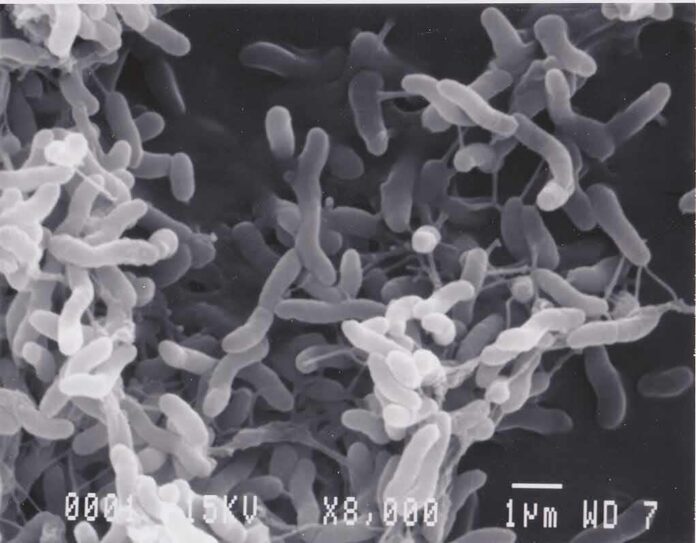
Scientists tested stomach tissue from four stranded whales and pulled ten samples total. Using genetic testing that targets a specific bacterial gene, they confirmed Helicobacter bacteria in every single one of the four whales, showing up in different parts of the stomach including the forestomach, fundus, and pylorus. That is a strong, consistent signal across every case studied.
Three New Bacteria Get Names
The genetic sequences did not match any known Helicobacter species. Researchers sorted them into three new groups, named Kogia Helicobacter 1, 2, and 3, after Kogia breviceps, the pygmy sperm whale’s scientific name. This marks the first time these particular bacterial genotypes have ever been documented in this species, expanding what scientists know about where Helicobacter bacteria can live.
Under the microscope, technicians spotted spiral-shaped bacteria matching Helicobacter in six of nine PCR-positive stomach samples, about 67 percent. That visual match backs up the genetic testing and makes a strong case that these bacteria were truly present and active in the tissue, not just a testing fluke.
Damaged Stomachs Raise Tough Questions
All four whales carrying the new bacteria also had stomach lesions. Researchers documented gastritis, ulcers, and scar tissue in the stomach lining. The study stops short of blaming the bacteria for killing these whales. Instead, the authors say the damage “may have contributed to stranding via reduced fitness,” a careful way of saying the whales may have been weaker and more likely to wash ashore.
That caution matters. Every one of the four whales also carried stomach worms, a well-known cause of gut damage in whales and other marine mammals. Worms could explain some or all of the lesions on their own. Without tests separating bacteria-only cases from worm-only cases, nobody can say for certain which culprit did the damage, or whether both worked together.
Why Small Numbers Deserve A Closer Look
Four whales is a tiny sample. All of them stranded along one stretch of Florida coastline between 2017 and 2020, according to the study. That geographic and sample-size limit means nobody should treat this as proof about pygmy sperm whales everywhere. Whales stranding in the Gulf of Mexico or the Caribbean could show completely different bacteria patterns, or none at all.
This fits a broader pattern seen in other stranded marine mammals, where bacteria like Vibrio and Photobacterium turn up often in sick or dead animals without always being the direct killer. Common sense says extraordinary claims about a new pathogen need extraordinary proof, not just a co-occurrence in a handful of animals. The researchers themselves want more work done before drawing firm conclusions.
What Comes Next For The Investigation
Scientists say the logical next step is growing these bacteria in a lab dish to test whether they actually damage whale stomach cells directly. Full genetic sequencing could also reveal whether Kogia Helicobacter 1, 2, and 3 carry the toxic genes that make some Helicobacter species dangerous in humans and other animals. Until that work is done, this remains a real discovery with an unproven verdict on danger.
Scientists studying decades of pygmy sperm whale strandings have uncovered three previously unknown types of Helicobacter bacteria hiding in the animals’ stomachs. All four infected whales showed serious digestive damage, including inflammation, ulcers, schttps://t.co/hSQJF76jbW
— Michael W. Deem (@Michael_W_Deem) July 21, 2026
For now, the takeaway is refreshingly honest science: a genuinely new find, reported without overselling the danger. That kind of restraint deserves credit in an era when headlines often race ahead of the data.
Sources:
sciencedaily.com, pubmed.ncbi.nlm.nih.gov