

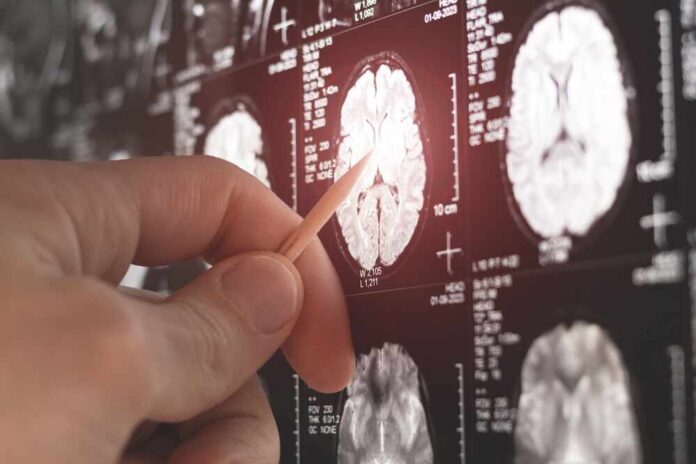
Scientists discovered the exact neural circuit that tells your brain you’re full, and it might revolutionize how we treat obesity and eating disorders.
Story Snapshot
- University of Arizona researchers identified the parasubthalamic nucleus (PSTh) as the brain region responsible for processing fullness signals
- The complete neural pathway involves gut hormones signaling through the amygdala to the PSTh, creating the sensation of satiation
- Recent research reveals these same neurons trigger dessert cravings through opiate pathways, explaining why we feel full but still want sweets
- The findings could lead to precision drugs targeting specific satiation circuits without affecting other brain functions
The Missing Piece of the Appetite Puzzle
The parasubthalamic nucleus sat in scientific literature for nearly two decades without a known purpose. Chinese scientists discovered this brain region in the 1990s, and English-language research acknowledged it in 2004, yet nobody understood what it actually did. The University of Arizona team changed that in February 2022 when they published findings in Molecular Metabolism demonstrating that the PSTh serves as the critical relay station for fullness signals. When they deactivated this region in laboratory studies, the normal satiation response disappeared entirely.
How Your Gut Talks to Your Brain About Fullness
The satiation pathway begins when your digestive system releases cholecystokinin, a hormone that scientists have long known signals fullness. What researchers hadn’t mapped was where that signal went and how it stopped you from eating. The Arizona team traced the complete circuit: CCK activates specific neurons in the amygdala called PKC-delta neurons, which then communicate with the PSTh. This brain region processes the signal and suppresses feeding behavior. The pathway operates like a relay race, with each station passing the baton until your brain registers that you’ve had enough.
The Dessert Stomach Mystery Solved
A 2025 study from the Max Planck Institute for Metabolism Research added a fascinating twist to the satiation story. The same neurons responsible for making you feel full also activate opiate pathways in your brain that trigger cravings for sweets. This dual function explains the universal experience of feeling completely satisfied after dinner yet somehow finding room for dessert. The neurons aren’t malfunctioning; they’re designed to seek calorie-dense foods even when basic hunger is satisfied, a feature that helped our ancestors survive but now contributes to modern obesity challenges.
Multiple Pathways Mean Multiple Treatment Options
The field has progressed beyond single-region theories of appetite control. Researchers now recognize that satiation involves multiple parallel circuits working simultaneously. GLP-1 receptor agonists like semaglutide, the active ingredient in popular weight-loss medications, operate through an entirely different pathway involving the dorsomedial hypothalamus. This discovery suggests that combination therapies targeting multiple circuits could prove more effective than drugs acting on a single pathway. Lead researcher Cai acknowledged that the PSTh represents just one piece in a larger puzzle.
Precision Medicine for a Billion People
Approximately one billion people worldwide struggle with obesity, and millions more battle eating disorders ranging from anorexia to binge eating disorder. The identification of specific neural circuits offers pharmaceutical companies concrete targets for drug development. More importantly, it enables precision medicine approaches that can modulate satiation pathways without affecting other amygdala functions like emotion processing and fear responses. Current obesity medications often produce side effects because they act broadly across brain regions. Drugs designed to target only the PSTh pathway could suppress appetite while avoiding unwanted neurological effects.
From Laboratory Discovery to Clinical Application
The research employed sophisticated techniques including optogenetic manipulation, which uses light to activate or deactivate specific neurons, and calcium imaging to track neural activity in real time. These methods confirmed that the PSTh is not merely associated with satiation but is absolutely required for CCK-induced fullness. Without functional PSTh neurons, the entire satiation response collapses. This definitive finding gives drug developers confidence that medications targeting this pathway will produce measurable effects. The transition from basic neuroscience to clinical therapeutics typically takes years, but the clear mechanistic understanding provided by this research could accelerate development timelines.
Sources:
Brain region associated with feeling full identified
Researchers identify brain region associated with feeling full after eating
Controlling Appetite Before It Starts – Scientists Identify Group of Neurons Linked to Feeling Full
Brain’s opiate pathway triggers dessert cravings even after fullness