
The same hot dog that “hits the spot” after a workout may quietly be making that workout less effective.
Story Snapshot
- Ultra-processed foods are linked to weaker muscles and more hidden fat in muscle tissue.
- Hot dogs deliver protein, but with a heavy load of saturated fat, salt, and additives.
- Research suggests diets high in ultra-processed foods raise the risk of low muscle mass.
- You can still build muscle while eating hot dogs, but they make the climb steeper and riskier.
Ultra-Processed Meat, Vanishing Muscle
Most people think muscle gain is simple math: lift weights, eat enough protein, watch the muscles grow. That story leaves out what kind of food delivers that protein. Ultra-processed foods like hot dogs, packaged snacks, and frozen ready meals are now under the microscope for how they change muscle itself, not just the number on the scale. A 2024 study using national health data found that adults who ate the most ultra-processed foods had a sharply higher risk of low muscle mass, even after adjusting for many lifestyle factors.
Separate research using magnetic resonance imaging looked inside people’s thigh muscles and found more fat threaded through the muscle tissue in those who ate more ultra-processed foods. That fat does not just sit there; it replaces healthy muscle fibers and is linked to weaker strength, worse mobility, and higher risk of joint problems. Doctors noted this pattern held up even when calories, body weight, and exercise were similar between people. In other words, the way the food is built can change the way your muscles are built.
Where Hot Dogs Fit In That Picture
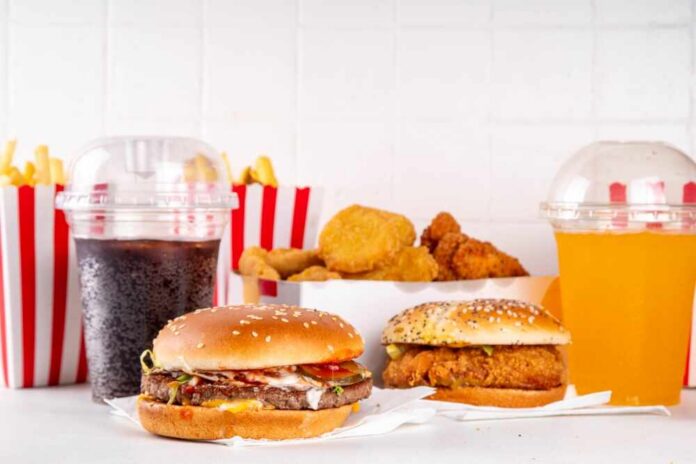
Hot dogs sit squarely in the ultra-processed, processed-meat category. They are made from meat trimmings, extra fat, refined starches, and a long list of preservatives and flavor enhancers. On paper, a hot dog does offer protein, but usually not much. Typical products only provide a modest amount of protein per serving while loading the body with saturated fat and sodium. That is the part many lifters ignore: you are trading dense protein sources like chicken or eggs for something that gives more salt and fat than muscle-building nutrients.
Large health organizations already flag processed meats as dangerous for long-term health. The World Health Organization classifies processed meats, including hot dogs, as cancer-causing, with only 50 grams per day raising colorectal cancer risk by about 18 percent. Other reviews link processed meats to higher risk of heart disease and type 2 diabetes, partly due to saturated fat and nitrite preservatives that can damage cells that manage insulin. None of that stops a hot dog from “counting” toward your protein total, but it does change the total cost to your body over time.
The Muscle-Building Catch: Protein Quality Versus Food Matrix
Sports nutrition experts are clear on one point: muscle protein synthesis mainly depends on eating enough total protein each day, especially high-quality protein rich in essential amino acids and leucine. If you hit roughly 1.6 to 1.7 grams of protein per kilogram of body weight per day from decent sources, long-term muscle gains can be strong, even if timing and distribution are not perfect. On that narrow metric, a hot dog can contribute a few grams of usable protein toward the daily target.
But controlled trials show that not all protein-containing foods behave the same once they hit your muscles. In one study, people lifted weights and then ate either a lean pork burger or a high-fat pork burger with similar total protein. The lean burger boosted muscle-protein synthesis clearly, while the high-fat version barely beat a sugary sports drink. The fat-rich meat matrix seemed to blunt the anabolic response. Hot dogs share that high-fat, heavily processed matrix, which suggests their protein is delivered in a way that may be less effective for immediate muscle building after hard training.
Practical Rules If You Care About Muscle Gains And Real Health
For someone over forty, muscle is not just about looks; it protects joints, supports balance, and keeps you independent. The research picture points to a simple set of rules. First, keep ultra-processed foods, including hot dogs, as occasional extras, not daily staples, if you care about muscle quality and long-term health. Second, let most of your protein come from lean meats, eggs, dairy, fish, and legumes that deliver amino acids without a heavy load of saturated fat, additives, and nitrites.
Third, if you choose to have a hot dog at a game or cookout, treat it like dessert, not like a recovery drink. Do not plan your protein strategy around foods that evidence links to more fat in muscles and higher risk of low muscle mass. Fourth, remember that doing the hard work in the gym is only half the story; the other half is choosing foods that help that work show up in your body instead of fighting it. You can build muscle while eating hot dogs, but you will build more, and keep it longer, if they are the rare exception instead of the daily habit.
Sources:
menshealth.com, news.illinois.edu, sciencedaily.com, passionhealthphysicians.com, facebook.com, health.yahoo.com, pmc.ncbi.nlm.nih.gov, studypages.com, mysportscience.com, youtube.com