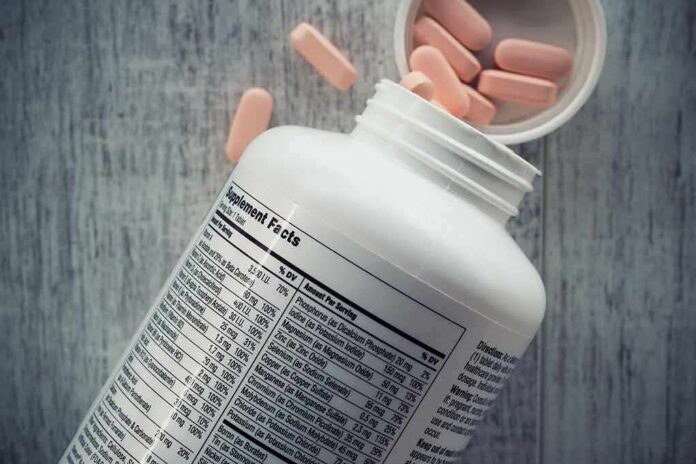
A common sexual function pill promising an instant fix can contain hidden prescription drugs your body never agreed to ingest, while the humble amino acid L-arginine actually has real science behind it.
Quick Take
- Federal health researchers warn many sexual-enhancement products are secretly spiked with drug ingredients
- A 2023 product analysis found most supplements use the wrong dose of L-arginine entirely
- Doctors still say L-arginine works best for mild to moderate cases, not a cure-all
What The Science Actually Shows About L-Arginine
Erectile function depends on blood flow. L-arginine gets converted into nitric oxide, a chemical that relaxes smooth muscle and widens blood vessels. That mechanism is well established in basic biology, and it is why researchers have tested the amino acid directly against the problem instead of dismissing it outright.
A 2024 network meta-analysis pooled 15 randomized trials covering 1,000 men. L-arginine, along with certain combination formulas, showed measurable improvement in erectile function scores compared to placebo. That is not hype from a bottle label. It is a controlled comparison published in a peer-reviewed sexual medicine journal.
A separate 2025 review in the Journal of Men’s Health reached a similar, more cautious conclusion. L-arginine, especially combined with L-citrulline, was generally safe and well tolerated. Researchers reported improvements of roughly 3 to 5 points on the standard erectile function scale, particularly in men with mild to moderate vascular-related dysfunction.
Why Dose And Source Matter More Than The Label
Here is where things get messy. A 2023 analysis of dietary supplements found L-arginine showed up in about 63 percent of products marketed for erectile dysfunction. The problem is almost none of them used the right amount. Researchers identified 5 grams as the minimum effective dose, yet most commercial formulas fell short.
That gap between what works in a lab and what sits on a store shelf matters. A man buying a bottle because he read that L-arginine helps may be taking a dose too small to do anything. The ingredient can work. The product he grabbed on impulse may not.
The Real Danger Hiding In Unregulated Pills
This is the part that should worry every man reaching for a flashy package near the checkout counter. The National Center for Complementary and Integrative Health states plainly that many products sold as herbal alternatives to prescription erectile dysfunction drugs have been secretly mixed with actual drug ingredients, sometimes in undisclosed or excessive amounts.
Those hidden ingredients can interact dangerously with nitrate medications, the kind often prescribed for heart conditions. The agency also notes these products get pushed through spam emails, single-serving sales gimmicks, and promises of rapid results, marketing tactics built to bypass careful thought rather than earn it.
No complementary approach has been formally established as both safe and effective for treating erectile dysfunction, according to the same federal health research agency. That is an important distinction from saying nothing works. It means the evidence is promising in specific, narrow cases, not proven across the board.
What This Means For Men Weighing Their Options
The honest takeaway here is not that every supplement is a scam, nor that L-arginine is a miracle fix. It is that ingredient-specific, dosed-correctly, clinically studied compounds sit in a completely different category than mystery pills sold under a flashy name with no ingredient transparency. Conflating the two does a disservice to men trying to make an informed choice.
Erectile dysfunction itself is often an early signal of deeper cardiovascular issues, which is exactly why self-treating with an unregulated pill carries real risk beyond wasted money. Men experiencing ongoing symptoms deserve an actual medical evaluation first, not a guess based on marketing copy and an emoji-laden product page.
Sources:
menshealth.com, jomh.org, nccih.nih.gov, pmc.ncbi.nlm.nih.gov