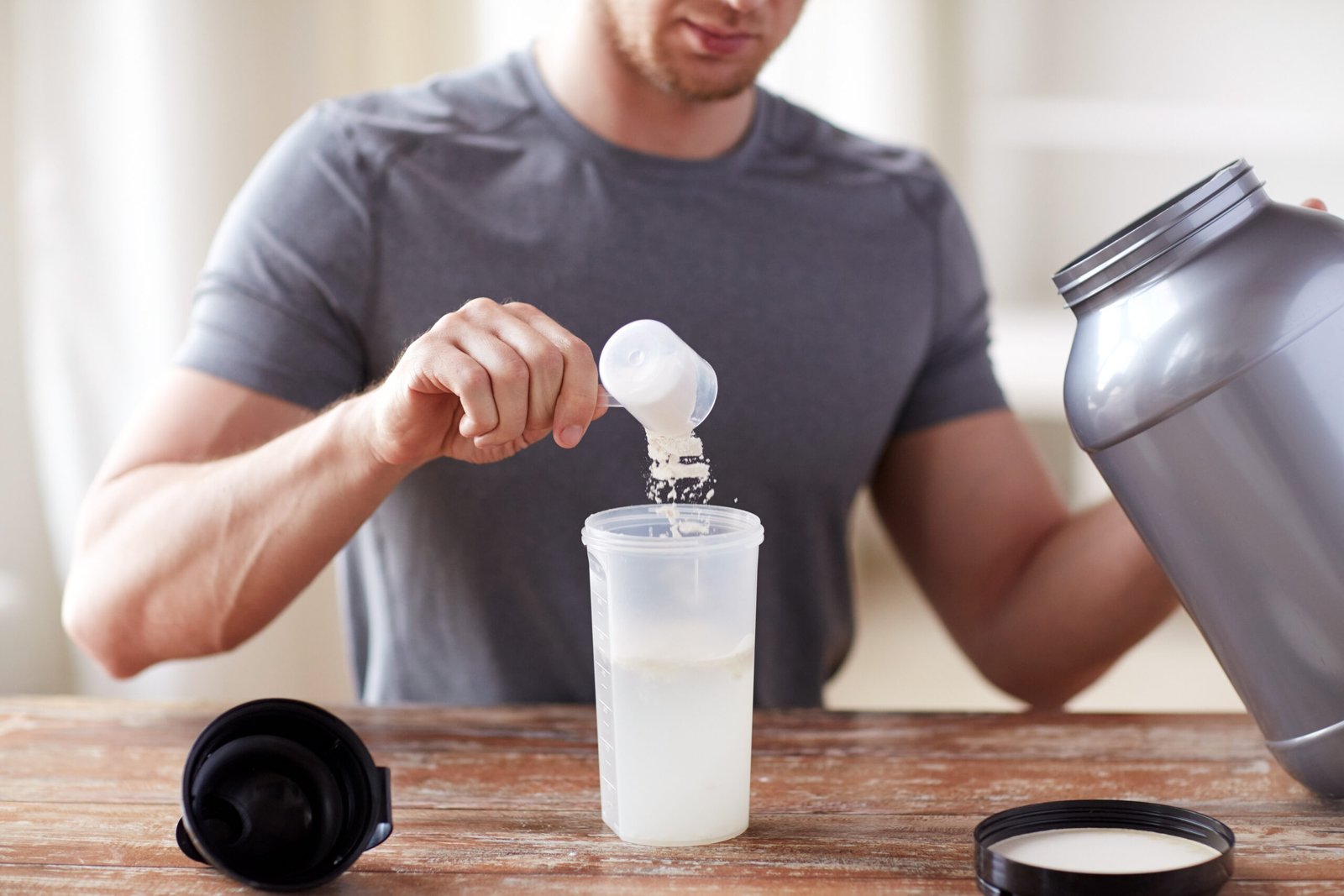
Your daily protein shake might be delivering more lead than nutrition labels—and the debate over what counts as “safe” is far messier than the marketing.
Story Snapshot
- Independent tests found many popular protein powders and shakes with lead levels above strict consumer-advocate thresholds.
- Plant-based powders, marketed as “clean,” often carry higher heavy-metal loads than dairy or beef-based options.
- Consumer Reports and industry groups clash over what “safe exposure” really means for everyday users.
- Consumers can cut risk dramatically by choosing rigorously tested brands and using conservative serving habits.
How Your Dail Shake Became a Heavy-Metal Science Experiment
Thousands of adults now treat protein shakes the way previous generations treated coffee: automatic, daily, unquestioned. That habit collided in October 2025 with new testing from Consumer Reports, which analyzed 23 popular powders and ready-to-drink shakes and found that roughly two-thirds delivered more lead in a single serving than its internal safety threshold of 0.5 micrograms per day, sometimes more than ten times over that line. For something marketed as health in a bottle, that raised predictable alarm—and even sharper denials.
Lead was not the only concern. The same investigation flagged cadmium and inorganic arsenic in some products at levels that Consumer Reports’ toxicologists considered worrisome for routine use, especially for people who double-scoop or drink multiple shakes a day. Plant-based formulas—pea, rice, soy, and blends—consistently showed higher average lead than whey or beef-based proteins, with some analyses estimating nine times more lead than dairy options and twice as much as beef-based powders. That upside-down result undercuts the lazy assumption that “plant-based” automatically equals cleaner or safer.
Safe science based weight loss, no guesswork.
Why Heavy Metals Show Up, And Why Plant Powders Get Hit Harder
Heavy metals like lead, cadmium, and arsenic do not appear because a nutritionist somewhere sprinkled them in. They sit in soil and water, get taken up by crops like peas and rice, and then become concentrated when manufacturers strip those plants down into high-protein isolates. Add potential contributions from processing equipment and packaging, and a “simple” shake starts to look like the end product of a complex industrial pipeline, not a mason-jar smoothie from the garden. Plant concentrates, by design, magnify whatever is in the soil—good and bad.
Regulation has not kept pace with that reality. In the United States, protein powders are treated as dietary supplements, not drugs, so companies do not need pre-market approval and face fewer explicit contaminant limits than conventional foods. The FDA tracks toxic elements in food broadly and can pursue adulterated products, but it has never set a specific numeric cap for lead uniquely in protein powders or shakes. That vacuum leaves room for very different “safe” numbers: the FDA’s more permissive reference intakes on one side, and Consumer Reports’ ultra-conservative 0.5 micrograms-per-day benchmark on the other, derived from California’s Proposition 65 standard with extra built-in safety factors.
Discover modern medical weight loss, start free.
Consumer Reports vs. The Supplement Industry: Whose Science Wins?
Consumer Reports framed its 2025 findings as evidence that contamination is widespread and worse than when it first raised concerns about protein powders back in 2010. The group launched a petition urging the FDA to adopt stronger, category-specific limits for lead in powders and shakes, arguing that daily users, pregnant women, and children deserve more than vague assurances. From a conservative, common-sense angle, asking for clearer, numeric standards in a product people drink every day looks more like basic accountability than overreach, especially when the government already polices lead closely in baby food and water.
Industry trade groups pushed back hard. The Council for Responsible Nutrition and the Natural Products Association labeled the report alarmist and unscientific, criticizing Consumer Reports for using thresholds they say sit far below what mainstream toxicology and federal agencies recognize as meaningful risk. Brands like Huel pointed to their NSF accreditation and testing that reported non-detectable lead at NSF’s own tolerance level of 3.6 micrograms. Their argument hinges on the idea that lead is ubiquitous in the environment, that zero is impossible, and that Consumer Reports effectively shifted the goalposts to a level few real-world foods could hit.
Reach your goals with AI guided medical insight.
What Real Risk Looks Like For Everyday Protein Users
Toxicologists quoted in independent coverage note that the absolute numbers involved are tiny—micrograms per serving, not milligrams—and that a single shake here and there will not poison a healthy adult. The risk sits in cumulative exposure. People often drink large servings, day after day, stacking that intake on top of lead from water, dust, food, and older housing. Children and women of reproductive age carry higher stakes because even low-dose chronic lead exposure can affect development and fetal health, which is exactly why California’s Proposition 65 and Consumer Reports set the bar so low in the first place.
Common sense suggests a middle road between panic and complacency. Protein powder is rarely the main driver of severe lead poisoning compared with tainted water, paint, or soil. But using a product every day that quietly adds avoidable micrograms of heavy metals over years collides with the conservative principle of minimizing unnecessary risk, especially when alternatives exist. From that lens, shrugging off chronic exposure because each individual serving is “small” looks less like science and more like marketing.
How To Choose Cleaner, Non-Toxic Protein Alternatives
Consumers do not need a chemistry degree to make better choices; they need a simple filter. First, favor brands that disclose third-party testing for heavy metals and hold certifications from organizations like NSF or Informed Choice, which apply explicit contaminant limits. Second, recognize that plant-based is not automatically safer; balance environmental or ethical preferences with contamination data and consider high-quality whey or mixed sources if heavy-metal results are clearly lower. Third, skip mega-servings and mass gainers unless medically necessary; more powder means more potential exposure.
Regulators and courts will keep wrestling with the fine print—where FDA reference levels should land, how Proposition 65 warnings apply, and when undisclosed heavy metals become a consumer-protection or failure-to-warn problem. For now, the practical path for anyone over 40 who leans on shakes for convenience is straightforward: treat protein powder like a tool, not a lifestyle; buy from companies that prove purity, not just promise it; and assume that the fewer unnecessary toxins you ask your body to manage, the better your odds of staying strong enough to enjoy the years you are trying to protect.
Struggling to lose weight? Try our AI doctor for GLP 1 options.
Sources:
Consumer Reports finds excessive amounts of lead in protein shakes
Protein Powders, Shakes Contain High Levels of Lead: Consumer Reports
Lead Contamination Found in Popular Protein Powders
Protein powders and shakes contain high levels of lead
Lead contamination continues to trouble the U.S. food sector
Scientists found lead in protein powders
Heavy Metals in Protein Supplements: Health Risk Assessment
Protein-Maxing, Lead Contamination, and the Law