

Women’s brains lose REM sleep faster than men’s as they age, according to sleep researchers who have tracked this pattern for decades.
Story Snapshot
- A widely cited sleep-aging review reports women show a greater rate of decline in REM sleep compared with age-matched men.
- REM sleep, the dream stage tied to memory and emotional processing, naturally shrinks with age in both sexes, but the drop-off speed differs by sex.
- Menopause and hormone shifts appear to play a major role in why women’s REM sleep changes accelerate around midlife.
- Other studies complicate the picture, showing REM differences can flip depending on age group and how REM is measured.
What The Research Actually Shows About REM And Age
Every person loses some REM sleep as they get older. That much is settled science. A major review on aging and sleep found the deep, dream-heavy stage steadily shrinks while lighter sleep stages take up more of the night. But when researchers broke the numbers down by sex, women showed a sharper drop in REM sleep than men of the same age.
REM sleep is the stage where your eyes dart around, your brain fires like you’re awake, and dreams get vivid. It matters for memory, mood regulation, and processing the day’s stress. Losing it isn’t just about feeling groggy. Long-term studies have linked reduced REM to higher mortality risk, with one Harvard-affiliated analysis finding a 13% jump in death risk for every 5% drop in REM sleep.
Why Midlife Hits Women’s Sleep Differently
Researchers point to hormones as the likely driver. Estrogen and progesterone don’t just regulate reproduction. They also influence brain chemistry tied to sleep cycles. As those hormone levels swing wildly during perimenopause and then drop after menopause, REM sleep architecture shifts along with them. One narrative review found the effect tends to hit hardest for women in their late 40s and 50s, right around when menopause typically begins.
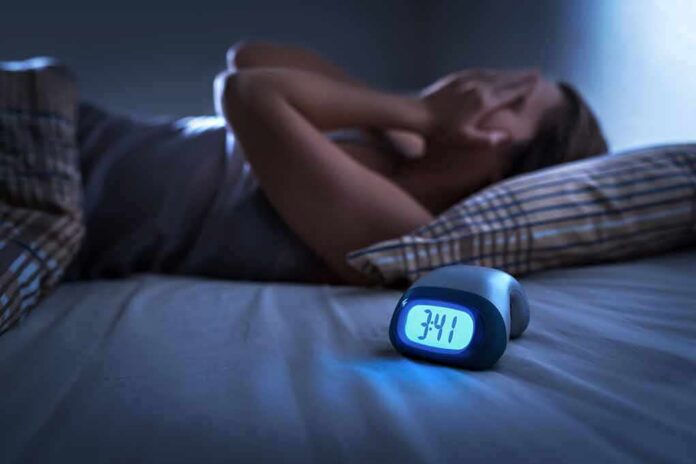
That timing lines up with something millions of women already know from experience. Hot flashes, night sweats, and racing thoughts at 3 a.m. aren’t just annoying interruptions. They’re happening during a biological window when REM sleep is already becoming harder to hold onto. A six-year study following premenopausal women found REM and deep sleep both declined as hormone levels changed.
Not Every Study Agrees On The Timeline Or Size Of The Gap
Science rarely hands over a clean, one-size-fits-all answer, and REM research is no exception. Some studies find women in their 60s actually show higher REM density than men the same age, while men in their 70s pull ahead instead. Others show the sex gap in REM narrows or reverses depending on whether researchers measure REM minutes, REM percentage, or REM density.
A global wearable-device study tracking sleep patterns across the adult lifespan found men generally sleep less overall, but women experience more nighttime awakenings as they age. That’s a different measure than REM decline specifically, but it shows how sex differences in sleep aging show up in multiple, sometimes contradictory ways depending on what scientists choose to track.
What This Means For Women Trying To Sleep Better After 40
None of this means women are doomed to bad sleep forever. It means the biological clock ticks differently for women, and doctors treating sleep complaints should account for that instead of applying a one-size-fits-all standard built mostly on male sleep data. A sex-differences review noted that circadian and sleep regulation genuinely operate on different mechanisms between men and women, starting as early as middle age.
For women navigating perimenopause and beyond, that’s a reason to take sleep complaints seriously rather than chalking every restless night up to stress or aging in general. Hormone-related sleep changes are measurable, documented, and increasingly well understood. Bringing that data to a doctor’s appointment beats guessing, and it beats accepting fragmented sleep as an unavoidable cost of getting older.
The bigger takeaway here is common sense wrapped in decades of clinical data. Bodies change with age, and men and women don’t always change the same way or on the same schedule. Recognizing that difference isn’t controversial. It’s just good medicine, and it’s long overdue for sleep research to catch up with what women have been reporting for years.
Sources:
mindbodygreen.com, pmc.ncbi.nlm.nih.gov, pubmed.ncbi.nlm.nih.gov, cdn2.hubspot.net, sleep.hms.harvard.edu, health.harvard.edu, sciencedirect.com, academic.oup.com